







 Garantía de entrega

SKU/Artículo: AMZ-B005FIT030
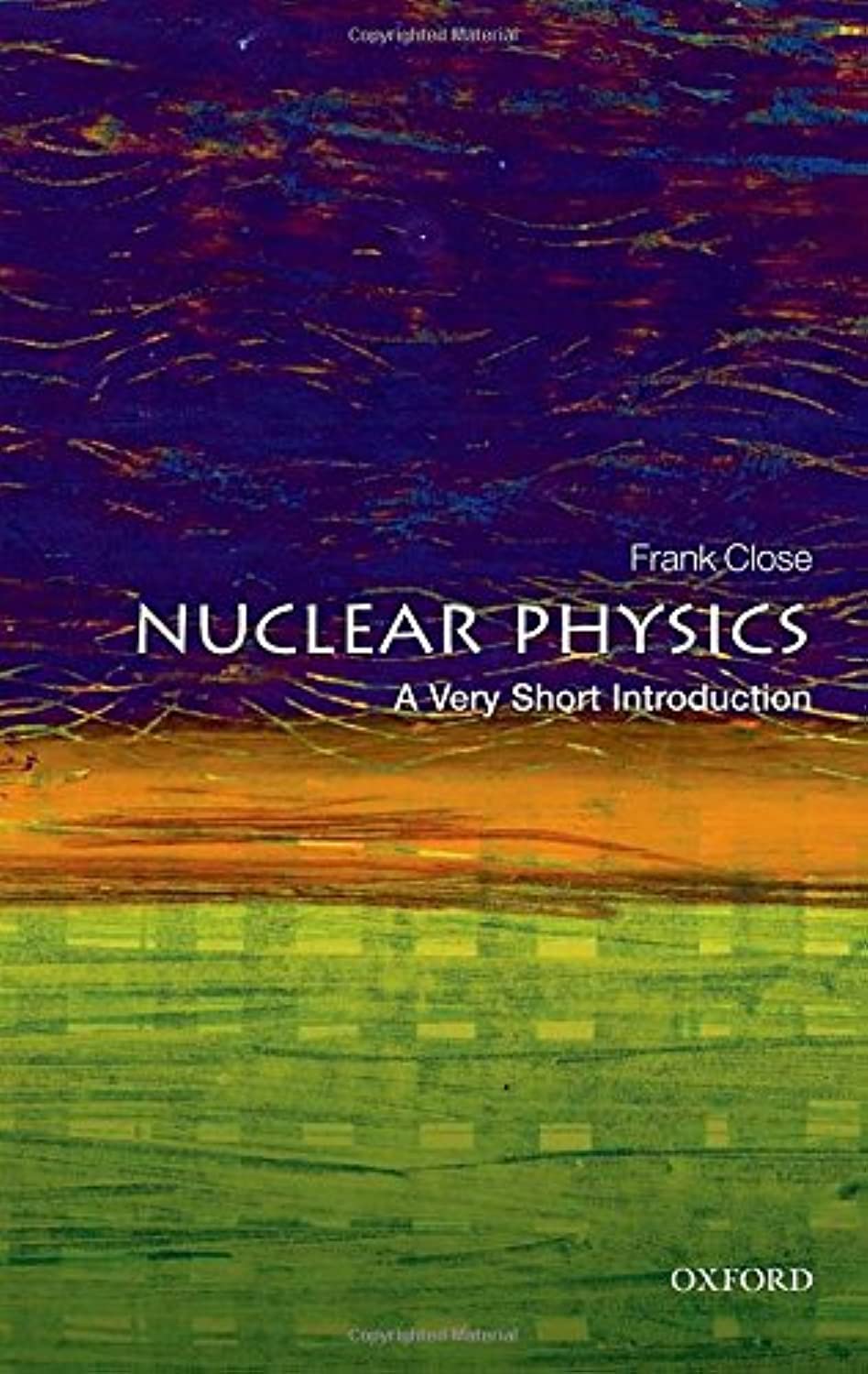
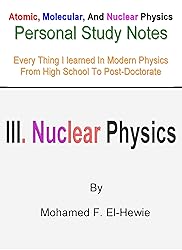
Nuclear Physics: Personal Study Notes (Atomic, Molecular, And Nuclear Physics: Personal Study Notes Book 3)
Format:
Kindle
Detalles del producto
Disponibilidad:
Fuera de stock
Fuera de stock
Peso con empaque:
0.36 kg
0.36 kg
Devolución:
No
No
Condición
Nuevo
Nuevo
Producto de:
Amazon
Amazon
Viaja desde
USA
USA
Sobre este producto
- This volume encompasses three chapters from my personal study notes which covers all courses and notes in my study of Nuclear Engineering, from high school throughout my post-doctorate associateship. TABLE OF CONTENTS CHAPTER 14: Artificial Transmutation VAN DE GRAAFF ELECTROSTATIC HIGH TENSION GENERATOR COCKCROFT AND WALTON TENSION MULTIPLIER RESONANCE ACCELERATOR—CYCLOTRON MORE POWERFUL PARTICLE-ACCELERATING MACHINES METHOD OF SCINTILLATIONS METHOD OF CHEMICAL SEPARATIONS MAGNETIC SPECTROGRAPH METHOD IONIZATION CHAMBER METHOD COUNTER METHOD 1. THE GEIGER COUNTER 2. THE SCINTILLATION COUNTER 3. THE CRYSTAL COUNTER CLOUD CHAMBER METHOD Diffusion cloud chamber PHOTOGRAPHIC EMULSION METHOD (1) Bohr's theory of nuclear disintegration (2) General scheme of nuclear reactions (3) Complexity of nuclear reactions (4) Equations of transmutations (5) Nuclear cross-section (σ) 1. Substitutional reactions 2. Radiative capture reactions 3. Resonance disintegrations 4. Exchange reactions 5. Photodisintegration 6. Disintegration by electrons THE NEUTRON (i) Production of neutrons (ii) Detection of neutrons (iii) Distribution in speed of neutrons—fast and slow neutrons (iv) Transmutations produced by neutrons (v) The mass of the neutron (vi) Absorption of neutrons in matter (vii) Diffraction of neutrons (viii) Mean life of free neutrons (ix) Some practical applications of neutrons 2. ARTIFICIAL OR INDUCED RADIOACTIVITY K ELECTRON CAPTURE NUCLEAR ISOMERISM 3. NUCLEAR FISSION (1) Means of inducing fission (2) Detection of fission (3) Fission products (4) Energy liberated in fission (5) Production of secondary neutrons in fission (6) Chain reaction (7) Transuranic elements THE REACTOR OR PILE THE ATOM BOMB (1) Source of stellar energy (2) The hydrogen bomb (3) The rigged H-bomb (4) Controlled thermonuclear reaction CHAPTER 15: Cosmic Rays A. The cosmic ray ionization chamber B. The coincidence counters C. The scintillation counters D. The counter controlled cloud chamber E. The photographic emulsion method F. The bubble chamber method 1. THE LATITUDE EFFECT 3. THE AZIMUTH EFFECT—EAST-WEST ASYMMETRY 4. THE NORTH-SOUTH EFFECT 5. SEASONAL AND DIURNAL CHANGES IN COSMIC RAY INTENSITY 6. THE ALTITUDE EFFECT 7. THE ABSORPTION OF COSMIC RAYS IN MATTER 8. MEASUREMENT OF THE ENERGY OF COSMIC RAYS 9. THE POSITRON A. Materialization of radiant energy B. Emission of positrons by artificially produced radioelements The mass of the positron The charge on the positron Absorption of positrons in matter Annihilation of matter 10- THE MESOTRON Mass of the meson Mean life of the meson Classification of the fundamental particles 11. COSMIC RAY SHOWERS 12. HEAVY PARTICLE COMPONENTS OF COSMIC RADIATION 13. NATURE AND COMPOSITION OF COSMIC RADIATION 14. ORIGIN OF COSMIC RAYS CHAPTER 16: Structure and Properties of the Nucleus 1. STRUCTURE OF NUCLEI A. Theories of nuclear composition (a) The proton-electron theory (b) The proton-neutron theory (c) The neutron-positron theory (d) The negative proton-neutron theory B. Nuclear Models 2. SIZE OF NUCLEI A. NUCLEAR METHODS (a) α-particle scattering (b) The scattering of protons (c) Neutron interaction B. ELECTRIC METHODS (a) Scattering of fast electrons by atomic nuclei (b) Mesic atoms (c) Isotope structure (d) Mirror nuclei 3. NUCLEAR MASS 4. NUCLEAR CHARGE 5. NUCLEAR QUANTUM STATES 6. NUCLEAR STATISTICS 7. NUCLEAR SPIN AND MAGNETIC MOMENT (i) ANALYSIS OF THE HYPERFINE STRUCTURE IN ATOMIC SPECTRA Nuclear electric quadrupole moments (a) Counting the number of hyperfine components (b) Measuring the relative separations of the members of a state cluster (c) Measuring the relative intensities of the components of the hyperfine pattern (d) Counting the number of hyperfine components in Zeeman effect (ii) METHOD OF ALTERNATING INTENSITIES IN BAND SPECTRA (iii) MAGNETIC DEFLECTION OF MOLECULAR AND ATOMIC BEAMS (iv) STUDY OF MAGNETIC RESONANCE RADIO FREQUENCY SPECTRA (v) ANALYSIS OF MICROWAVE SPECTRA BIBLIOGRAPH

Producto prohibido
Este producto no está disponible
Compra protegida
Disfruta de una experiencia de compra segura y confiable
![]() Garantía de entrega
Garantía de entrega
Con Tiendamia todas tus compras cuentan con Garantía de Entrega o devolución total de tu dinero.
Compras 100% seguras y garantizadas, para que pidas lo que soñás y lo recibas del mundo a tu puerta.
Saber más.
Tarjetas prepagas, debito, y credito
Paga hasta en 12 cuotas sin interés con tarjetas de crédito.

Visa

Mastercard

American Express

Dinners

Discover

Lider

Midinero

OCA

OCA Blue

Tarjeta PREX
Pagos a través de PayPal
Paga en dólares con Tarjetas internacionales a través de PayPal.

PayPal

 Tienes garantía de entrega