






 Garantía de entrega





SKU/Artículo: AMZ-B0DXQ6JY1F
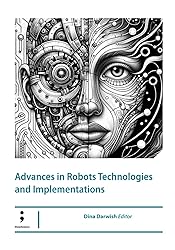
Advances in Robots Technologies and Implementations
Format:
Paperback
Detalles del producto
Disponibilidad:
En stock
En stock
Peso con empaque:
0.47 kg
0.47 kg
Devolución:
Sí
Sí
Condición
Nuevo
Nuevo
Producto de:
Amazon
Amazon
Viaja desde
USA
USA
Sobre este producto
- This book provides a good beginning for people interested in knowing more information about robots, and includes several chapters ranging from, robots main concepts, robots functioning basics, advances in robotics technologies and implementations, robots in education, and advanced topics in robotics. When one considers the history of robotics, one discovers that there is a widespread interest in endowing robots with humanity or elements that are characteristic of humans. In general, there are primary criteria, which are as follows: - The robot must be able to resemble a human being in some manner (in terms of look, thinking, and personality, for example). - The robot needs to be superior in some way (that is, it needs to be stronger, smarter, etc.). This means that the designer of the robot must have full control over the robot themselves. When it came to the history of robotics, a significant turning point occurred when robots that were more powerful than people were created. It was about the year 1769 when the first industrial revolution began, and it was around this time that machines began to supplant the human input to labor. During that time period, the primary objective was to increase the number of products as well as decrease the amount of time and money spent on manufacturing, all without involving any human intervention. At that point in time, automation emerged as the most common notion. Automation allows for the completion of several procedures without the need for any involvement from a human being. People were forced to come up with new methods of working and living as a result of humans being replaced by robots. Machines are able to operate around the clock because they do not experience fatigue in the same way that people do. Automation led to a reduction in both the likelihood of making mistakes and the quantity of waste produced. In addition, robots are distinguished by their regulated precision and their enhanced efficiency. It was not possible to have access to computer technology in the 1800s. Nevertheless, mankind was able to construct gigantic machines that were capable of carrying out difficult jobs. Following the year 1950, there has been a significant advancement in the field of robots. The discovery of the moon's surface by the first mobile robot that was operated remotely, which occurred around the year 1970, is another significant event in the history of robotics. Later on, in 1986, Honda initiated a project with the intention of developing humanoid robots that have a similar appearance to that of humans. Robots began to appear in an increasing number of industries, including healthcare, manufacturing, and logistics, as the progress of the technology continued. In spite of the fact that the development of robots is still in progress, we can already find robots in our everyday life. For example, robots can be found in the household (in the form of vacuum cleaners), in the office (in the form of assembly robots), and in the medical field (in the form of social robots in patient therapy or surgical robots). This is the fourth industrial revolution that humanity is now experiencing. This revolution is integrating the most cutting-edge developing technologies, such as robots, internet of things, fifth-generation wireless networks, artificial intelligence, and many others, in order to propel the industry to new heights. There are several categories that may be applied to robots.
U$S 16,20
44% OFF
U$S 9,00
IMPORTÁ FACIL
Comprando este producto podrás descontar el IVA con tu número de RUT
NO CONSUME FRANQUICIA
Si tu carrito tiene solo libros o CD’s, no consume franquicia y podés comprar hasta U$S 1000 al año.
U$S 16,20
44% OFF
U$S 9,00
 Llega en 5 a 11 días hábiles
con envío
 Tienes garantía de entrega
Compra protegida
Disfruta de una experiencia de compra segura y confiable
![]() Garantía de entrega
Garantía de entrega
Con Tiendamia todas tus compras cuentan con Garantía de Entrega o devolución total de tu dinero.
Compras 100% seguras y garantizadas, para que pidas lo que soñás y lo recibas del mundo a tu puerta.
Saber más.
Tarjetas prepagas, debito, y credito
Paga hasta en 12 cuotas sin interés con tarjetas de crédito.

Visa

Mastercard

American Express

Dinners

Discover

Lider

Midinero

OCA

OCA Blue

Tarjeta PREX
Pagos a través de PayPal
Paga en dólares con Tarjetas internacionales a través de PayPal.

PayPal